Bucket formats and rim variation
Provide full stacks of every bucket format, including normal and difficult examples. Show the variation in rim shape and identify the formats the denester must handle.
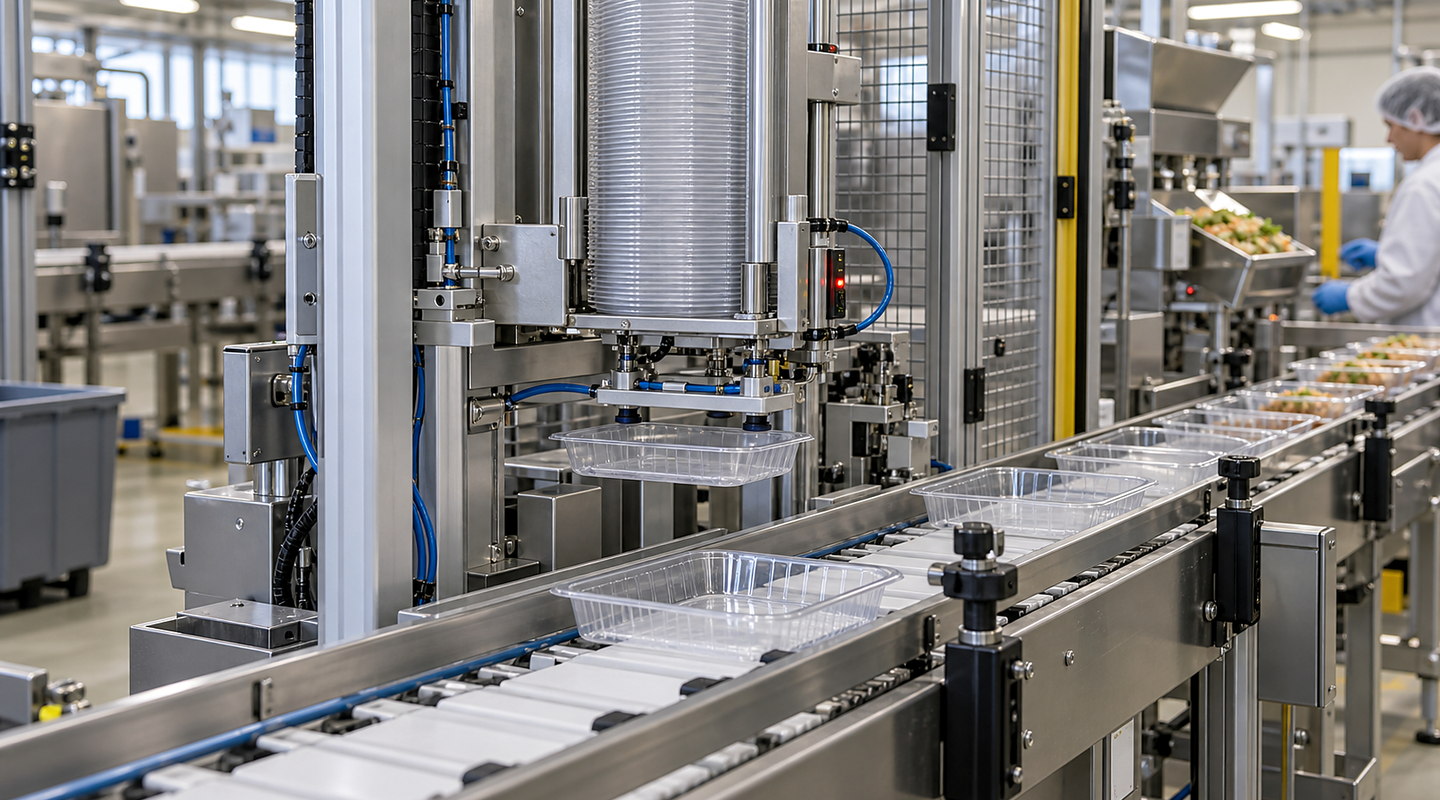
Plan bucket denesters around real component variation, bulk condition, orientation, usable delivery rate and the downstream interface. Discuss representative part trials with Sorting Solutions.
Speak directly with Sorting Solutions about bucket and pail denesting.
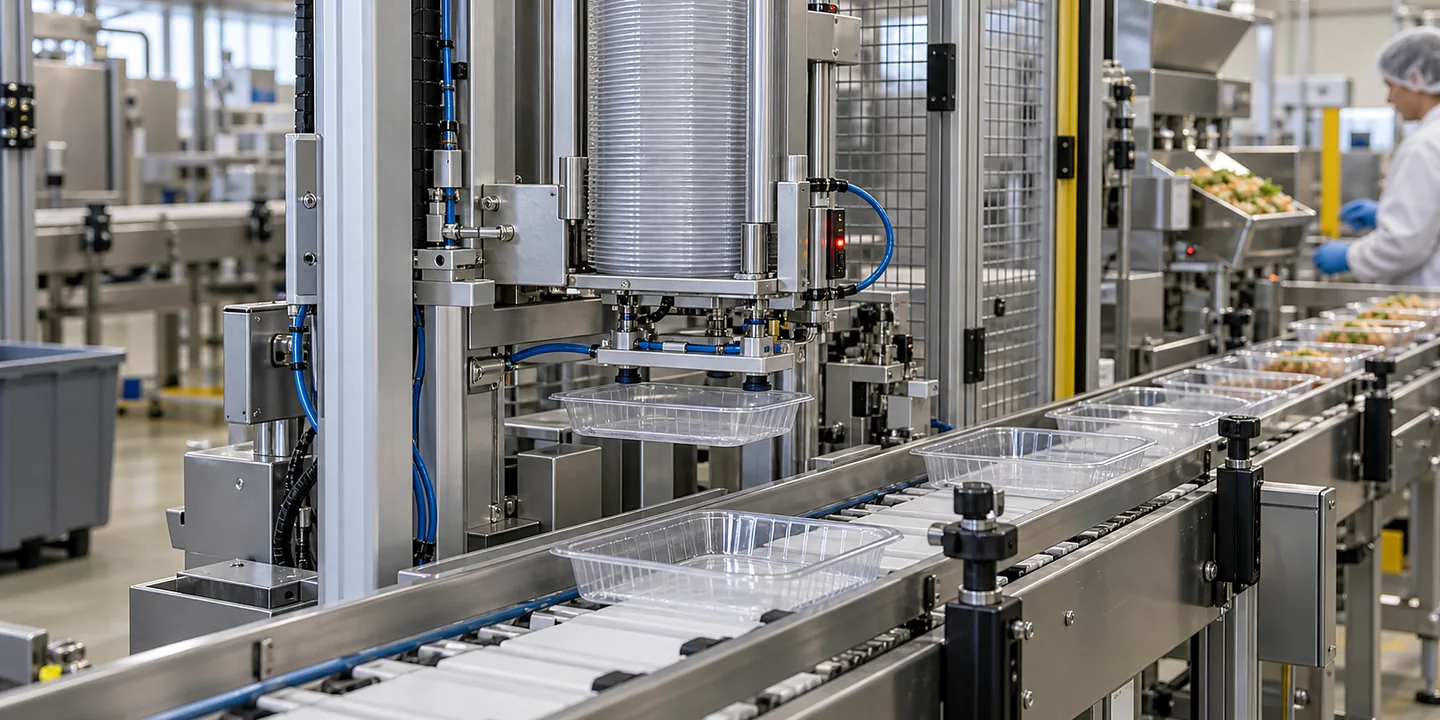
Photographs illustrate tray denesting and component feeding. Bucket and pail suitability requires trials with the actual stacked containers.
Provide full stacks of each bucket format, including variation in rim shape and how tightly they nest. Define the required discharge orientation and the receiving conveyor. Trial first and last buckets, double picks and stack replenishment, and agree how the machine detects a missing or incorrectly separated bucket.
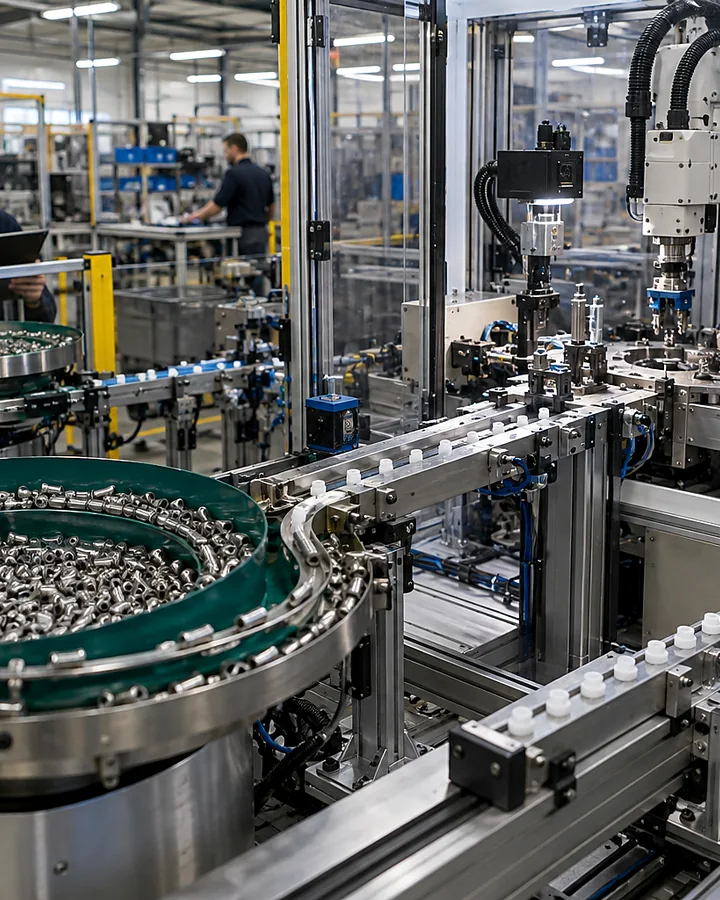

For bulk presentation using bucket and pail denesting, share the normal condition, realistic range and difficult cases the finished system must handle.
Provide full stacks of every bucket format, including normal and difficult examples. Show the variation in rim shape and identify the formats the denester must handle.
Describe how tightly the buckets nest and any unacceptable damage during separation. Use representative stacks in trials rather than relying on a single loose bucket.
Explain how stacks will be supplied and replenished during production. Trial the first and last buckets in a stack and include the operator access needed for replenishment.
Define the required bucket orientation and the receiving conveyor. State the usable delivery rate needed by the downstream process, not only the quoted output of the feeder.
Describe the downstream interface and the upstream and downstream states that affect bucket delivery. Record the required line connections and identify any dependencies on surrounding equipment.
Trial double picks and agree how a missing or incorrectly separated bucket will be detected. Define and record the checks for jams, damage and recovery before accepting the denesting sequence.
The right choice changes with component geometry and variation for bucket & pail denesting, surface, fragility and entanglement behaviour, your line layout and required results.
You can review decisions about escapement and downstream pick interface and jam, damage and recovery acceptance checks at each stage.
Share representative production components and the downstream interface, including the normal range for component geometry and variation for bucket & pail denesting and the difficult surface, fragility and entanglement behaviour cases.
Compare suitable methods and use focused trials to show how each option performs against bulk condition and replenishment method.
Connect the equipment to your line, services and controls while resolving required orientation and delivery rate for day-to-day operation.
Confirm escapement and downstream pick interface, then complete and record jam, damage and recovery acceptance checks before your operating team takes over.
Your final solution for bucket and pail denesting must reflect the law, current standards and site-specific risks that apply to your installation.